
Nevada's Antimony Story
Nevada prospectors and miners have long known about the presence of antimony in this state. According to a 1963 report from the Nevada Bureau of Mines (NBM*), “Nevada has produced antimony since 1865.” The amount of that production has always been low especially in comparison to Nevada’s better-known mineral resources of silver and gold. That same report notes that antimony was best extracted through underground mining methods, which could be costly. Thus, Nevada has commercially produced antimony only during periods of high prices for the element, which are usually times of war when antimony is needed for the manufacturing of weapons. During the 20th century, Nevada’s production of antimony peaked during World War I (1915-1919), World War II (1940-1945), and the Korean War (1950s).
In peacetime, antimony was used primarily in the production of automotive batteries. Whether used in batteries or weapons, the demand for antimony was not huge. Before 1963, global production rarely exceeded 60,000 tons, and the supply could typically be met by one or two geographic sources. China has dominated the antimony market for decades, but Mexico and Bolivia were the primary producers in the 1930s when China’s resources were unavailable. Domestic production of antimony has typically been a small percentage of the total global output, with the vast majority of U.S. antimony coming from Idaho. The United States has consistently been “the world’s largest consumer of antimony [but] it has never been a major producer,” according to NBM; in 1958, for example, the U.S. produced only 705 tons of the 11,880 tons it consumed.
During peak periods of production, however, Nevada was typically the number two producer in the United States. In addition to locations where the element could be extracted from the ground, Nevada had mills that could process the ore and separate the element from its host. It’s one thing to extract minerals and metals from the ground, but additional processing is often required to make the target mineral useful. If ore must be shipped to be processed, it adds exponentially to the cost of extracting the mineral.
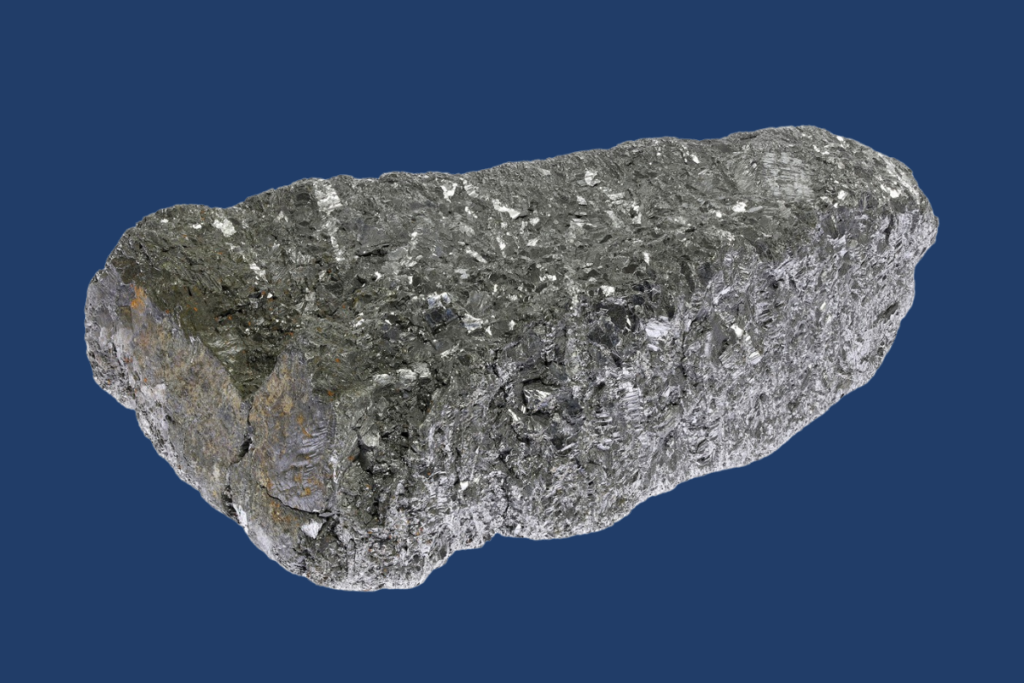
In mid-1860s, the country’s first smelters to treat antimony ores were constructed in Montana and Nevada, but Nevada’s mill was the first to export its production. (Montana’s mill was for local use.) This first mill was built at Oreana in 1867 to treat the ore from the Trinity Mining District in (now) Pershing County. Antimony was just one of the elements produced from this district where the first discoveries were made in 1859. Other minerals included silver, gold, lead, copper, and later, tungsten. A mill operated sporadically at Oreana until it finally closed in the 1970s.
Unfortunately, no one source reports the total amount of Nevada antimony produced on an annual basis. It must be culled from several sources, including newspaper articles. A word-search of “antimony” in Nevada newspapers from 1860-1940 yields thousands of hits, which indicates that the element has been a significant mining topic of conversation throughout the state’s history. Also included in those conversations were warnings, from both miners and Nevada’s congressional representatives, about relying too heavily on foreign sources for antimony and other minerals.
The 1963 report explained that antimony is a fairly common element in Nevada and has been found in every county except Storey and Ormsby (now combined with Carson City). Of the remaining 15 counties, all but Clark, Lincoln, and Lyon had shipped antimony ore before 1963. The NBM report (pages 7-8) names more than 30 mines, mostly located in Lander and Pershing Counties, that produced antimony between 1870 and 1960 and summarized Nevada’s production with a focus on the World War II period:
“Total production figures for each year are impossible to obtain but the following data are significant. In 1941, 16 operations produced 691 tons of ore containing 146 tons of antimony; in 1942, 11 operations produced 305 tons of ore containing 96 tons of antimony; in 1943, 84 tons of ore were produced containing 32 tons of antimony; in 1944, 5 operations produced 74 tons of ore containing 30 tons of antimony; and in 1945, 3 operations produced 65 tons of ore containing 32 tons of antimony.”
For the years before World War II, production numbers are haphazard at best. For example, on February 10, 1916, the Nevada State Journal reported that Nevada was a “considerable producer of antimony” in 1915, producing around 2,000 tons. It also noted that the last year of major production was 1892 when Nevada produced 150 tons of the metal and exported an additional 289 tons of ore that contained some portion of antimony.
Nearly a decade after the NBM’s focus on antimony, the Reno Evening Gazette reported that antimony production had increased in 1970, and another mill was built at Oreana. (December 18, 1970) With production declining within a year (Nevada State Journal, August 19, 1971), the mill soon closed again. Tungsten was also produced at this mill; like most mills, its production included more than one metal or mineral, depending on the market at the time.
In an article published on April 20, 1970, Reno’s morning newspaper encouraged prospecting hobbyists to pursue antimony as a profitable weekend activity. Raw antimony, which NBM’s John Shilling noted could be chipped out by pickaxe and a shovel, could be sold to a smelter “for about $1.25 a pound.” The price had been inflated by an effort to stockpile critical minerals domestically, rather than import them from China. Shilling went on to explain that “Nevada could supply the world market in antimony, but even that is such a small tonnage that it probably won’t happen.”
Article contributed by Dana Bennett.